
Budget Accurately for Plumbing, Bath, and Heating Upgrades
One of the primary financial pitfalls in residential real estate investing and house flipping is underestimating the true cost of wet-room tear-outs and hidden mechanical infrastructure. When purchasing a distressed property, it is incredibly easy to focus entirely on the visual transformation. You might walk through a space and immediately start visualizing new paint colors, updated flooring, and modern lighting fixtures. However, cosmetic upgrades are only one part of the equation. While beautiful finishes are ultimately what sell properties to end buyers, the integrity of the hidden infrastructure is what protects your appraisal values, helps you navigate strict inspection contingencies, and ultimately safeguards your net profit margins.
If the mechanical systems fail an inspection or a hidden leak destroys your newly laid floors, the return on investment plummets instantly. An actionable, line-item budgeting framework is essential for balancing back-of-wall mechanical reliability with high-impact, buyer-facing finishes. By isolating capital for plumbing, heating, and aesthetic wet-room overhauls, investors can avoid the devastating surprise of mid-project cost overruns.
Audit Wall Cavities and Subfloors to Establish an Accurate Base Contingency

Before committing capital to expensive surface materials, you must conduct a thorough audit of the property supply lines and waste stacks. Novice flippers often skip this step, only to discover catastrophic leaks after the drywall is painted and the new floors are installed. Conduct pre-purchase camera inspections on main sewer stacks, supply branch runs, and horizontal waste drains before demolition begins. These preliminary inspections give you the data needed to evaluate legacy supply piping. If the property contains degraded galvanized pipes or brittle polybutylene, calculate the exact per-linear-foot cost of tearing out and replacing those materials with modern PEX tubing throughout the core residential plumbing network. Budgeting for a whole-house repipe early on prevents emergency change orders. Plumbers typically charge by the linear foot, so obtaining multiple bids yields an accurate base contingency.
Beyond the pipes themselves, account for the secondary costs associated with subfloor moisture damage and structural rot. When you pull up old tubs and water closets, you will frequently find decades of slow leakage that compromised the wood below. Your contingency budget needs to accommodate rotted joist sistering, subfloor plywood replacement, and mold remediation. Formulate an isolated mechanical contingency reserve of fifteen to twenty percent, kept entirely distinct from cosmetic budget lines.
Consider the following critical items when auditing hidden spaces:
- Check for polybutylene or lead pipes, which will trigger mandatory replacement requirements.
- Inspect cast iron sewer stacks for vertical cracks or heavy scaling.
- Evaluate the subfloor around toilets and shower pans with a moisture meter to detect hidden rot.
- Assess whether existing ventilation shafts are properly routed to the roof exterior.
- Verify the water pressure at multiple fixtures simultaneously to identify potential blockages.
Weigh Long-Term Efficiency Gains Against Upfront Mechanical Sizing
Evaluating the central mechanical plant is a critical step during initial property walkthroughs. You must decide whether to patch the existing systems or execute a full replacement. Modernizing outdated fossil fuel or baseboard heating systems by investing in dual-fuel or mini-split Heat pumps can radically alter the appeal of the home. Perform a strict cost-benefit calculation before making this choice. While the initial capital required for new climate control systems is substantially higher than a simple furnace service call, these modern systems offer incredible energy efficiency. This appeals directly to cost-conscious buyers and translates into faster sales cycles and stronger appraisal values. Leverage federal tax credits and local utility rebates to offset the upfront purchase prices, subsidizing your property upgrade.
Similarly, you must carefully evaluate the condition of domestic hot water tanks. Key inspection criteria include the age of the unit, visible tank corrosion, and the depletion status of the sacrificial anode rod. These factors help flippers budget accurately between scheduling an economical water heater repair and executing a mandatory whole-unit replacement to satisfy local code requirements. If a tank is relatively young but struggling to maintain temperature, spending a few hundred dollars to replace a faulty thermocouple makes financial sense. If the tank is older than ten years and shows rust, trying to salvage it is a massive liability.
When budgeting for heating and cooling mechanicals, factor in these specific expenses:
- Load calculations and ductwork modifications required to handle modern airflow requirements.
- Electrical panel upgrades to support new high-efficiency electric climate systems.
- Permitting fees required for removing old gas lines or decommissioning buried oil tanks.
- Condensate drainage routing to ensure moisture is safely expelled away from the foundation.
- The cost of pouring new concrete equipment pads for exterior condenser units.
Triage Fixture Servicing Against Complete Line Replacements
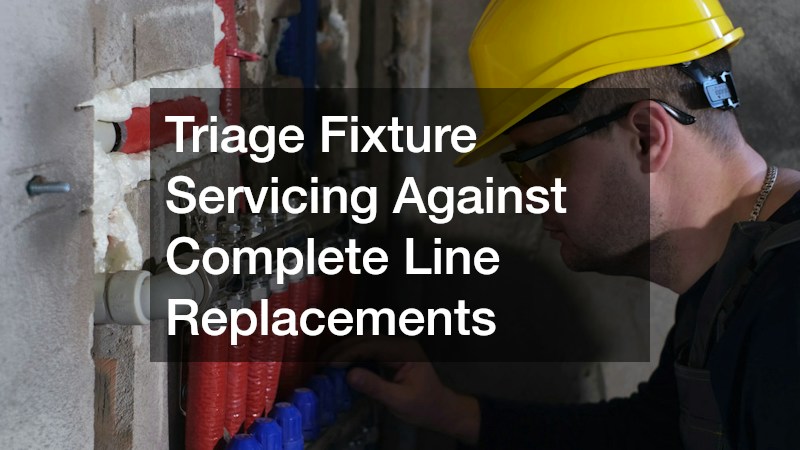
In many distressed properties, the existing wet-room fixtures might look atrocious, but the underlying brass valve bodies and connections remain perfectly sound. Establishing a decision matrix for salvaging mid-grade brass and valve bodies versus paying for whole-room rough-ins is vital for maintaining profit margins. Real estate investors can protect early-stage cash flow by diagnosing minor valve stem, cartridge, or aerator issues, budgeting modest funds for a targeted faucet repair on high-end existing fixtures rather than paying for full fixture removals. Leaving the original rough-in valves inside the wall eliminates the need to break open drywall, cut pipes, and patch the surrounding substrate. This localized servicing approach minimizes master-trade billable hours by keeping the primary connections in their original structural locations.
Conversely, there are specific scenarios where fixture refurbishment is impossible, and complete replacement is the only viable path. Severe interior mineral buildup will permanently restrict water flow and cannot be fixed by soaking components in descaling acid. Stripped threads on the valve body will prevent new trim kits from seating properly, leading to leaks inside the wall cavity. Obsolete valve body designs that do not meet modern pressure-balancing requirements pose a significant safety hazard. Without pressure-balancing technology, a sudden drop in cold water pressure could cause scalding hot water to discharge. In these cases, your budget must absorb the cost of a full rough-in replacement.
To accurately budget for fixture triage, build your cost model around these decision points:
- Determine if universal trim kits are available for the existing in-wall valve brands.
- Calculate the labor cost of rebuilding a cartridge versus the hourly rate of opening the wall.
- Assess the finish condition of the exposed drain assemblies and overflow plates.
- Evaluate the shut-off valves beneath sinks and toilets to ensure they rotate freely.
- Include a buffer in the budget for replacing rigid supply lines with flexible braided hoses.
Structure Trade Agreements to Prevent Costly Scope Creep
One of the greatest threats to a flip project is unmanaged scope creep, where variable time-and-materials billing rapidly erodes your projected margins. Drafting comprehensive scopes of work is essential before a single wall is opened. Outline the negotiation process meticulously, showing how to solicit itemized milestone bids and lock in fixed labor rates with an insured bathroom remodel contractor to insulate the project budget from mid-renovation labor adjustments. An ironclad scope of work details exactly who is responsible for material acquisition, job site debris removal, and daily cleanup. It ties payments directly to measurable project milestones, such as passing rough-in inspections, completing the waterproofing layer, and securing final city sign-offs. Requiring signed lien waivers at every payment interval guarantees subcontractors are paid directly.
To maintain an accurate total spend throughout the project lifecycle, implement a percentage-based capital allocation model. A full-scale bathroom remodeling project requires funds to be distributed carefully across several distinct phases, including demolition, substrate waterproofing, tile installation, ventilation upgrades, and finish electrical work. For instance, allocating fifteen percent to demolition and prep, thirty percent to rough plumbing, thirty-five percent to tile, and twenty percent to final fixtures keeps your budget strictly regimented. If the rough plumbing phase goes over budget, you instantly know that you must value-engineer the finish materials to absorb the loss.
Ensure your trade agreements cover the following critical clauses:
- A rigid timeline with specific start dates, target completion dates, and daily penalties for unjustified delays.
- Clear stipulations on who provides the rough materials versus finish materials.
- A defined change order process that requires written approval and a fixed price before extra work commences.
- Specifications regarding the exact waterproofing methods and membranes to be used in wet areas.
- A warranty period covering both labor and materials, protecting your buyers after closing.
Allocate Finish Capital Toward High-Impact Storage and Enclosures

Once the rough mechanics are secured and the drywall is closed, your budgeting strategy must shift to maximizing visual impact through careful sourcing of finish materials. You have to balance structural prep work like blocking, leveling, and framing with high-visibility aesthetic deliverables. It is easy to overspend at luxury showrooms, but experienced flippers compare off-the-shelf flat-pack furniture against modular, factory-assembled bathroom vanities to find the perfect middle ground. Buying pre-assembled units directly from regional wholesalers offers excellent unit-cost benchmarks. Purchase a structurally sound, mid-grade unit and elevate its perceived listing quality by discarding generic knobs and installing high-end designer hardware. This strategy allows you to deliver a premium look to buyers without inflating baseline millwork allowances or paying the exorbitant fees associated with custom cabinetry fabrication.
Enclosures represent another massive capital allocation that requires strategic budgeting. Standard bypass shower doors are cheap but often make a space feel cramped. Outline the specific line-item expenses associated with installing a heavy, minimalist frameless shower door to understand its true cost. This is not just a matter of buying the glass. The installation demands essential rough-carpentry stud reinforcement behind the tile to support the immense weight of the hinges. It also requires precision glass fabrication, exact templating, and specialized hardware. Failing to budget for the necessary wood blocking during the framing stage will lead to catastrophic structural failures.
Optimize your finishing budgets by adhering to these guidelines:
- Source matching mirrors and lighting fixtures in bulk from commercial supply houses.
- Verify the depth of standard cabinet bases against your floor plan to ensure adequate clearance.
- Ensure carpenters install solid wood blocking horizontally wherever heavy glass hinges will be mounted.
- Template glass enclosures only after the final tile and grout are installed to prevent sizing errors.
- Select hardware finishes that complement the overall house aesthetic, like brushed nickel or matte black.
Optimize Surface Fabrication Yields Across High-Traffic Zones

Surfaces are one of the most heavily scrutinized elements by prospective home buyers, and optimizing your slab yields across high-traffic zones is paramount for budget control. Implementing advanced slab optimization techniques drastically minimizes off-cut waste. Break down linear and square-foot pricing models for pre-cut or remnant slabs, demonstrating why budgeting for an engineered quartz countertop yields the highest return on investment due to its extremely low stain liability and uniform patterns. Because engineered slabs lack the unpredictable veining of natural marble, fabricators can nest multiple vanity tops and kitchen sections close together without worrying about matching intricate stone grains. This high yield per slab drops your total material cost significantly, allowing you to stretch a single purchase across multiple rooms.
However, there are times when standard fabrication is not enough for the target neighborhood, and you must evaluate higher fabrication labor rates. Define the pricing tiers associated with non-standard sink cutouts, waterfall edges, and mitered aprons when commissioning a specialized custom countertop for a luxury property. Highlight exactly when bespoke fabrication generates measurable margin and when it represents a severe over-improvement. In a starter home flip, a drop-in sink on a standard prefabricated slab is perfectly acceptable. In a high-end transitional neighborhood, buyers expect seamless undermount sinks and thickened edge profiles. You must budget for the increased labor hours required to cut, polish, and epoxy these intricate details.
Keep these factors in mind when allocating funds for stone and solid surfaces:
- Request digital templates from your fabricator to visualize cut layouts before the blade touches the stone.
- Utilize remnant yards for smaller vanity tops, which can often be purchased for a fraction of the cost.
- Account for the plumbing disconnect and reconnect fees associated with pulling old surfaces.
- Choose a standard eased edge profile, as complex ogee edges incur hefty linear-foot surcharges.
- Verify that the cabinet boxes are perfectly level, as uneven bases will crack rigid stone materials.
Achieving optimal returns on a renovated property requires a disciplined approach to every line item in your spreadsheet. The relationship between back-of-wall infrastructure funding and front-end aesthetic investments is the delicate balance that defines a successful project. Throwing money at beautiful tiles and luxury fixtures will not save a property that fails its plumbing and electrical inspections. Conversely, overspending on top-tier mechanical systems while leaving the living spaces drab and uninspiring will cause the property to sit on the market for months, draining your holding budget.
Strict adherence to itemized contracts, detailed scopes of work, and clear contingency allocations will insulate your project from the unpredictable nature of residential construction. By executing thorough pre-purchase inspections, intelligently sourcing your finishing materials, and carefully managing trade labor, you can transform a distressed asset into a highly profitable, turnkey home. Always finalize your trade budgets and secure your material supply chains before submitting offers or beginning demolition. With a rigorous financial plan in place, you can confidently navigate the complexities of property renovation, delivering a beautiful, reliable home to the market while fiercely protecting your bottom line.