
Landscaping Tips Professionals Swear By
Creating an attractive and functional outdoor space takes more than choosing a few plants and arranging outdoor furniture. Effective landscaping requires thoughtful planning, appropriate materials, proper installation techniques, and an understanding of how different elements work together. Whether you are updating a small backyard or transforming an entire property, professional approaches can help you avoid common mistakes and create a space that fits your needs. From patios and walkways to trees, planting beds, and drainage features, each component contributes to the overall design.
In this comprehensive guide, we explore practical landscaping tips professionals commonly use when planning and improving outdoor spaces. These considerations can help you evaluate contractors, materials, hardscape features, property preparation, and tree-related services before beginning your next project.
What Should I Consider When Hiring A Patio Contractor?

Evaluate Experience And Reviews
Before hiring a patio contractor, look beyond a company’s basic service description and examine the type of work it has completed. Experience with projects similar to yours can be particularly useful because patios vary in size, materials, layout, grading requirements, and intended use. A contractor who regularly installs the type of patio you want may already understand common installation challenges.
Reviews can provide another source of information. Look for comments that describe communication, scheduling, workmanship, cleanup, and whether the finished project matched the agreed-upon scope. Photos of completed projects can also help you determine whether a contractor’s design approach aligns with your expectations.
Ask prospective contractors how they approach preparation before installation. Proper grading, drainage, excavation, and base preparation can influence how a patio performs over time. Asking questions about the installation process can give you a clearer picture of what the project involves.
Check For Licenses And Insurance
Licensing and insurance are important considerations when evaluating any contractor working on your property. Requirements vary by location and type of work, so homeowners should familiarize themselves with applicable local requirements before hiring someone. Ask what licenses or registrations apply to the project and whether documentation is available.
Insurance is equally important because construction work can involve property damage or injuries. Ask whether the contractor carries applicable liability coverage and workers’ compensation coverage for employees. Taking these steps before work begins can help clarify responsibilities if an unexpected situation occurs.
How To Choose Between Deck And Patio Contractors?
Assess Your Space And Budget
Choosing between deck and patio contractors begins with understanding how you intend to use the space. A patio may work well for a ground-level entertaining area, while a deck can provide an elevated outdoor space and may be useful when a property has significant changes in elevation. Existing landscaping, access from the home, drainage, and available yard space can all influence the decision.
Budget is another important factor, but the initial construction cost should not be the only consideration. Think about long-term maintenance, expected lifespan, repairs, cleaning, and potential material replacement. Comparing these factors can give you a more complete understanding of what each option may require.
Explore Design Options And Materials
Material selection can significantly affect the appearance and maintenance requirements of an outdoor living area. Patios can incorporate concrete, pavers, natural stone, or other hardscape products, while decks may use wood or manufactured decking materials. Each option has different characteristics involving appearance, maintenance, installation, and cost.
Design should also account for the relationship between the outdoor structure and the rest of the property. Consider the colors and textures already present on the home, retaining walls, walkways, planting beds, and other features. Coordinating these elements can make the finished project feel intentional rather than disconnected from the surrounding landscaping.
What Are The Benefits Of Hiring A Hardscaping Service?

Professional Design And Installation
A hardscaping service can help homeowners integrate non-plant elements into an outdoor design. Hardscape features can include patios, walkways, retaining walls, steps, seating areas, fire features, and other constructed elements. Because these features often involve excavation, grading, drainage, and structural considerations, professional installation can be useful for projects that go beyond simple decorative additions.
Planning is particularly important when several hardscape elements need to work together. A walkway should provide a practical route through the property, while a patio needs adequate space for its intended use. Retaining walls may need to address changes in elevation, and drainage should be considered wherever water could collect or move toward structures.
Professional installation can also help create consistent transitions between different materials and areas. When hardscape features are integrated with planting beds, lawns, trees, and other elements, the property can have a more cohesive appearance.
Durable And Low-Maintenance Solutions
One advantage of hardscaping is that many hardscape materials require less routine care than living plant material. That does not mean these features require no maintenance. Pavers may need cleaning or joint maintenance, concrete can develop cracks, and retaining walls should be monitored for changes or movement.
Professionals can also help homeowners select materials based on how a space will be used. A frequently traveled walkway may require different considerations than a decorative garden path. Similarly, an entertaining area that receives substantial foot traffic may benefit from materials selected for durability and ease of upkeep.
Thoughtful hardscaping can provide structure to a property while complementing its living elements. When combined with appropriate planting, drainage, and outdoor furnishings, these features can make an outdoor area easier to use throughout the year.
How To Identify Reliable Hardscaping Companies?
Research Local Options And Compare Quotes
Researching several hardscaping companies can help you understand the range of approaches available for your project. Rather than focusing only on the lowest quote, compare what each proposal actually includes. One estimate may include excavation, base preparation, installation, and cleanup, while another may leave some tasks outside the stated scope.
Ask contractors to explain the materials they propose using and the installation process involved. If the project requires drainage work, grading, demolition, or excavation, those services should be clearly addressed in the proposal. Written estimates can make it easier to compare the scope of work.
Timing should also be discussed before signing an agreement. Weather, material availability, permitting, and project complexity can affect scheduling. Understanding potential delays in advance can help homeowners plan around the work.
Look For Portfolio And References
A portfolio can provide useful insight into a contractor’s experience with different styles, materials, and property layouts. Look for projects that resemble your own in terms of scale or design. Examples of similar completed work can help you determine whether the contractor has experience with your preferred approach.
References can offer additional information about the customer experience. When contacting references, consider asking about communication, project organization, workmanship, cleanup, and whether the contractor addressed concerns during construction.
You can also ask whether the project was completed according to the original agreement and whether unexpected changes occurred. Understanding how a contractor handled challenges can provide useful context when comparing options.
What Are Essential Hardscaping Tips For Homeowners?
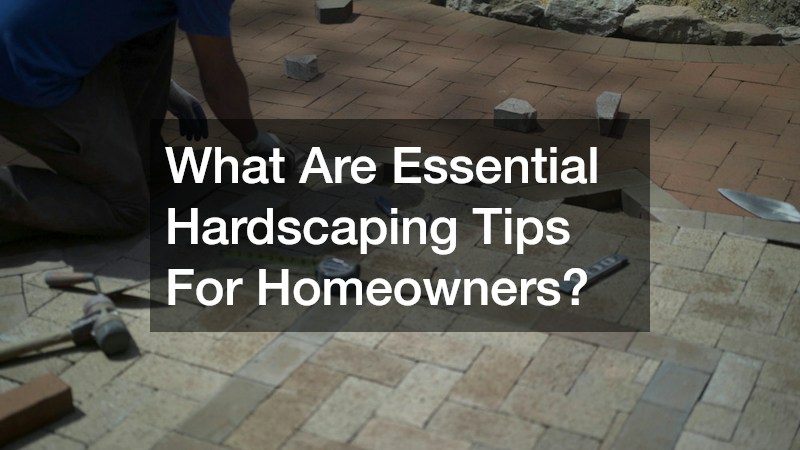
Choose Complementary Materials
Material selection should take the entire property into account rather than focusing on one feature in isolation. The color, texture, and scale of a patio or walkway can influence how the home and surrounding landscaping appear. Materials that complement existing architectural details can help create a more unified outdoor environment.
It is also important to consider how materials will look under different conditions. A surface may appear different in direct sunlight, shade, or after rain. Samples can be useful when deciding between colors or finishes, particularly when a large installation is involved.
Maintenance should remain part of the selection process. Consider how easily each material can be cleaned, how it responds to regular use, and what maintenance may be necessary over time.
Incorporate Functionality
Effective hardscaping should make an outdoor area easier and more comfortable to use. Walkways should provide logical routes between destinations, while patios and seating areas should accommodate the activities you actually plan to enjoy. Practical considerations should guide the placement of decorative features.
Think about circulation when planning multiple hardscape features. People should have enough room to move between doors, seating areas, gardens, and other destinations without creating awkward bottlenecks. If children, pets, or older adults regularly use the space, accessibility and surface transitions may deserve additional attention.
Lighting can also contribute to functionality. Pathway lighting, step lighting, or illumination around an entertaining area can make outdoor spaces more usable after dark. Drainage should likewise be incorporated so that water does not interfere with the intended use of the space.
What Should I Know About Land Clearing For Landscaping?
Understand Local Regulations
Land clearing can involve considerably more than removing unwanted vegetation. Depending on the property and location, work may involve trees, brush, grading, drainage, erosion control, or protected areas. Before beginning a clearing project, homeowners should determine whether local permits or other approvals are required.
Restrictions may apply to certain trees, wetlands, waterways, property boundaries, or environmentally sensitive areas. Homeowners should also consider utility locations before excavation or heavy equipment enters the property. Understanding these requirements can help prevent unnecessary delays.
The purpose of the clearing project should also be established in advance. Clearing a small area for a garden is different from preparing an entire property for a new outdoor living area. Defining the intended use helps determine how much vegetation should be removed and which existing features may be worth preserving.
Hire Professional Services For Safety
Professional land clearing can be especially useful when a property contains large trees, dense brush, steep slopes, or difficult access points. Heavy equipment and cutting tools can create significant hazards when used without appropriate experience. Professionals can assess the site and determine which methods are suitable.
Preserving desirable trees and vegetation should also be part of the planning process whenever possible. Strategic clearing can leave established trees and other useful features in place while creating room for new landscaping.
Once clearing is complete, the property may require additional preparation before new construction or planting begins. Depending on the project, this could involve grading, soil preparation, erosion control, or debris removal.
When Should I Contact A Landscaping Contractor?
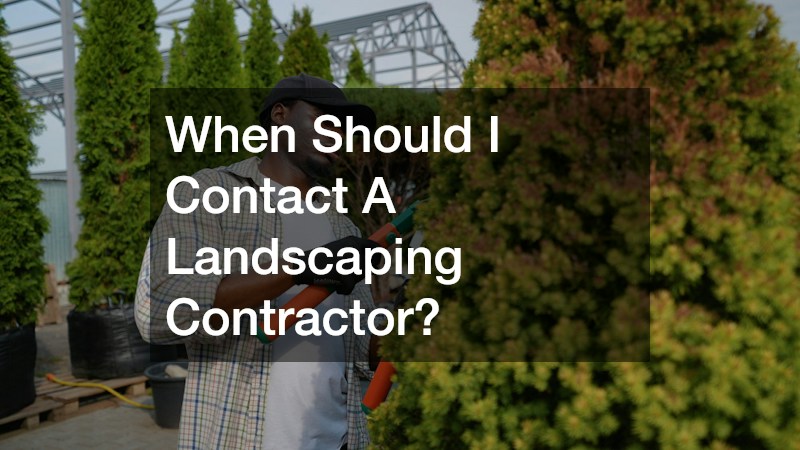
Planning A Major Renovation
Contacting a landscaping contractor early can be beneficial when an outdoor renovation involves multiple elements. A project that combines planting beds, trees, patios, walkways, drainage, lighting, and other features requires coordination to ensure that one installation does not interfere with another.
Planning everything together can also help establish priorities and create a logical sequence for construction. For example, underground drainage or utility work may need to be completed before a patio or planting bed is installed. Addressing these relationships during planning can help prevent unnecessary removal or rework later.
A major renovation is also an opportunity to evaluate how the property functions as a whole. Homeowners can consider circulation, privacy, outdoor entertaining, maintenance, shade, and visual balance rather than treating each feature as a separate addition.
Need For Tailored Design Solutions
Every property has different conditions, which means landscaping plans should not necessarily follow a one-size-fits-all formula. Soil composition, sunlight, drainage, slope, existing vegetation, and available space can all influence what will work effectively. A landscaping contractor can assess these conditions and develop recommendations around the property’s characteristics.
Homeowners should also communicate how they want to use the finished space. Someone who enjoys gardening may prioritize planting areas, while another homeowner may want more room for entertaining or recreation. Sharing these priorities helps ensure that the design addresses actual needs.
Professional planning can also account for future maintenance. Plant selection, irrigation, lawn areas, hardscape materials, and tree placement can all affect how much ongoing work the property requires. Considering those responsibilities before installation can make the finished landscaping easier to manage.
How To Find Local Tree Companies For Tree Removals?
Seek Recommendations And Online Reviews
When tree work is needed, start by researching local tree companies with experience handling the specific type of project involved. Local tree removals, trimming, stump work, and storm-related cleanup can each require different equipment and techniques. Recommendations from people who have completed similar projects can provide a useful starting point.
Online reviews can offer additional context, particularly when they describe communication, scheduling, cleanup, and handling of the work area. Look for detailed feedback rather than relying exclusively on overall ratings. Photos of previous projects may also help demonstrate experience with different tree sizes and property conditions.
It is also useful to obtain a written description of the proposed work before authorizing it. The agreement should make clear which trees or branches will be addressed, whether stump removal is included, how debris will be handled, and what cleanup is expected.
Inquire About Certification And Insurance
Tree work can involve significant risks because branches, trunks, equipment, and debris can affect structures, vehicles, landscaping, and people on the property. Before hiring a tree service, ask about applicable certifications, training, and insurance. Requirements vary, so homeowners should verify which credentials apply to the work.
Insurance is particularly important when workers will be climbing trees or operating equipment near structures. Ask for documentation when appropriate and ask how the company approaches protecting lawns, gardens, fences, driveways, and other nearby property during the project.
Tree removal can also affect surrounding landscaping, especially when large equipment or falling limbs are involved. Discuss access, cleanup, stump treatment or removal, and restoration before work begins. This can help you understand the full scope of the project and prepare the property accordingly.
The most effective approach is to evaluate your property before making major decisions. Consider how you use the space, which features you want to add or preserve, how much maintenance you are prepared to handle, and what preparation the site may require. With realistic planning and careful selection of professionals, your landscaping project can create a functional outdoor environment that complements your home and remains useful for years to come.